

A clearer, more confident way to support eating concerns in under 10 minutes
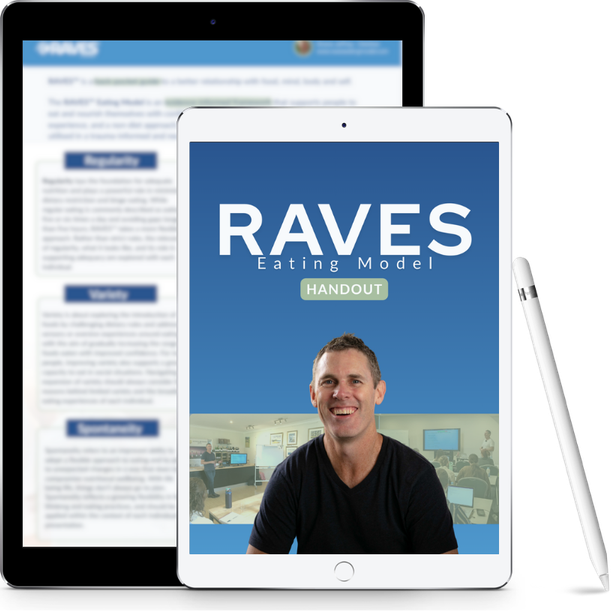
Download the updated RAVES™ Handout and use a flexible, evidence-informed model to support eating in a way that respects autonomy, context, and lived experience.
The RAVES™ Handout has been used by clinicians around the world for years as a practical guide to supporting eating concerns.
This updated version has been refreshed to better reflect trauma-informed, neuroaffirming, and non-diet practice. It offers clearer language, refined framing, and a more supportive way to explain eating work to clients and supervisees.
RAVES™ is not a meal plan or a set of rules. It is a framework that helps people stabilise eating, reduce restriction, and gradually develop a more flexible and confident relationship with food.


What the RAVES™ Handout Covers
Regularity as a foundation for nutritional rehabilitation
Adequacy and how it supports physiological and psychological safety
Variety without pressure or forced exposure
Eating socially with greater confidence and predictability
Spontaneity as flexibility rather than chaos
Natural Eating Practices and the three-phase progression
The handout is designed to be used as a back-pocket resource that supports clarity in clinical decision-making and consistency across sessions.
Who This Is For
This resource is designed for:
Dietitians and therapists who work with eating concerns
Clinicians looking for a structured yet flexible model
Practitioners wanting to reduce reliance on diet culture language
Early-career professionals seeking a simple “back-pocket” framework
Experienced clinicians wanting to refresh or fine-tune their approach
If you’ve ever wished for a clearer, more compassionate way to support eating, RAVES™ will fit seamlessly into your work.
Hear from Shane
About RAVES™
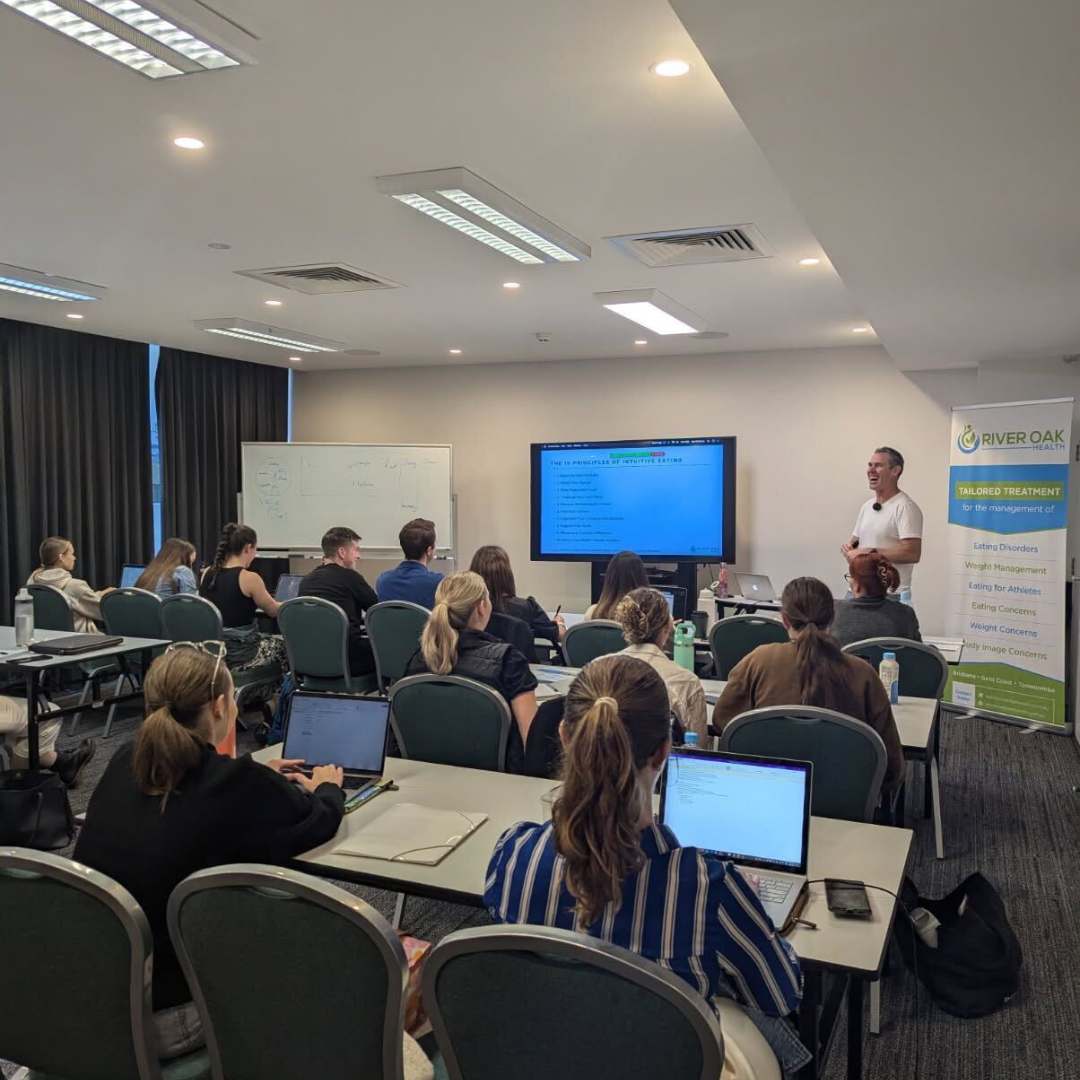
Created by Accredited Practising Dietitian Shane Jeffrey, the RAVES™ Eating Model is an evidence-informed framework used internationally to support a more confident, compassionate, and sustainable relationship with food.
It draws on nutritional science, clinical experience, and a non-diet approach while centering client autonomy and individual presentation
